

How to Choose the Right Nursery Furniture
Choosing nursery furniture feels like a bigger decision than it probably should be—until you're standing in your third store, overwhelmed by options, wondering if you really need that fancy changing table. Here's the thing: the right nursery furniture isn't about Pinterest-perfect aesthetics. It's about creating a space that actually works for your family, grows with your child, and holds up to the realities of parenthood (spills, bumps, midnight chaos).
Our Top Picks
Affiliate disclosure: if you buy through these links, we may earn a commission at no extra cost to you.
In this guide, I'm sharing what I've learned from setting up nurseries for my own kids and helping dozens of other parents navigate these choices. We'll cover what you actually need, what's worth the investment, and the red flags to watch out for. By the end, you'll know exactly what to look for—and what to skip.
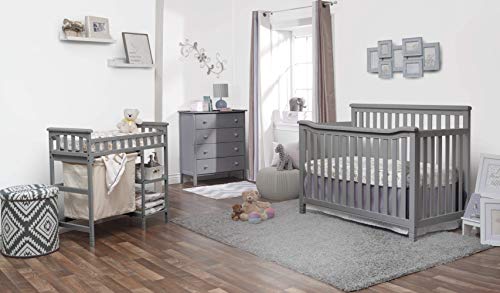
Sorelle Palisades 3-Piece Nursery Set with 4-in-1 Convertible Crib, 4-Drawer Dresser, Changing Table with Hamper, Baby Furniture Made of Wood, Non-Toxic Finish, Nursery Furniture Set - Grey
$408.49Check Price
Table of Contents
Start With Your Space and Real Needs
Before you buy a single piece of furniture, measure your room. I mean actually measure it—don't just eyeball it. Nursery spaces vary wildly, from cozy corners in a master bedroom to dedicated rooms. A full-size crib, dresser, and changing table might look lovely in a showroom but leave you squeezing past furniture at 3 a.m. when you're half-asleep.
Think about how you'll actually use the space. Are you planning to spend hours in the room during the day, or will it mostly be for nighttime and quick changes? Will your partner be tag-teaming diaper changes, or is this primarily your domain? If you're nursing or bottle-feeding primarily at night, you might prioritize a comfortable chair over a large dresser. If you're doing most diaper changes during the day, you need a changing surface that feels efficient and ergonomic.
Also consider your long-term plan. Will your child transition to a toddler bed in this room at age 2? Or will they move to a different room? Some furniture choices only make sense if you're planning to adapt the space as your child grows.
The Essential Pieces (and What's Truly Optional)
Crib or Safe Sleep Surface (Essential): Your baby needs a safe place to sleep that meets current safety standards. This is non-negotiable. A full-size crib, mini crib, or bassinet are all legitimate options depending on your space and plans. Full-size cribs are the most common and offer the longest use (newborn through roughly age 3). Mini cribs save space but limit how long you can use them. Bassinets are wonderful for early months but aren't meant for long-term use. Choose based on your actual room size and timeline—not what looks best.
Changing Surface (Highly Useful, Not Strictly Essential): You need somewhere to change diapers safely. A changing table provides good ergonomics and storage, but a dresser with a changing pad on top works beautifully too. Some parents skip this entirely and use a portable changing pad on any flat surface. If your back is going to appreciate not hunching over, invest in the right height. Dressers that double as changing stations are excellent space-savers and extend their usefulness far beyond the baby phase.
Storage/Dresser (Essential for Most Families): You need somewhere to store baby clothes, diapers, wipes, and all the gear that comes with a small human. A dresser is the obvious choice. Make sure it's deep enough to hold folded clothes without everything toppling out and sturdy enough that an older toddler can't pull it over. This furniture piece will likely stay in the room for years, so choose something you don't mind looking at long-term.
Seating (Important for Sanity): Whether it's a glider, rocker, or simple chair, having a comfortable place to sit in the nursery is worth its weight in gold. You'll sit here for night feeds, soothing, rocking, and just breathing through the hard moments. Don't skip this or "make do" with an uncomfortable option. A quality glider costs $300-600 but lasts through multiple children. Cheaper rockers can be okay, but they wear out and become physically painful to use multiple times a night.
Optional But Nice-to-Have: Blackout curtains, a white noise machine, wall-mounted shelving for books and toys, and a small side table for nighttime essentials. These enhance functionality but aren't foundational purchases.
Safety Standards and Red Flags
This is where I get firm: safety isn't an area to compromise or get creative with. All crib mattresses should meet CPSC (Consumer Product Safety Commission) standards. Your crib itself should be CPSC-certified. If you're buying used, verify the item hasn't been recalled. Check the Consumer Product Safety Commission website—recalls happen regularly, and some are serious.
Watch for these red flags: Ornate crib designs with decorative cutouts (these are entrapment hazards for tiny limbs). Changing tables without safety straps or a lip to prevent rolling. Dressers that aren't anchored to the wall (toddlers climb, and unsecured furniture falls—sometimes with tragic consequences). Cribs with drop-sides (illegal since 2010, but used versions still exist). Any furniture with sharp edges, peeling paint, or visible damage.
If you're buying used furniture, ask specifically about recalls and inspect for recalls yourself online. Look for stability—gently shake a dresser before buying to see if it wobbles. With a changing table, make sure the work surface is truly secure and won't shift unexpectedly. These aren't paranoid checks; they're the difference between functional furniture and a potential hazard.
Durability and Longevity: Will It Survive?
Nursery furniture needs to survive sticky fingers, teething on rails, throws from an overexcited toddler, and the general chaos of young parenthood. Here's what actually lasts: solid wood furniture (real wood, not veneer) withstands better than particle board or MDF. Metal frames stay true longer than wood joints that loosen over time. Quality padding on gliders doesn't shred after a year of daily use. Hardware that's properly installed doesn't rattle or break off.
Think about the finish too. A crib with a durable finish resists scratches and chewing marks better than a painted or stained one. Upholstered pieces should have removable, washable covers—because they will get messy. A glider with a $40 replacement cover is infinitely better than one where the fabric is permanently attached.
Here's my honest take: spending $400 on a quality glider that lasts through three kids is smarter than spending $150 on a wobbly rocker that falls apart and leaves you standing for two years. Your comfort during 2 a.m. feeds directly impacts your sanity. Same logic applies to other pieces—buy durable where you'll use it daily, and you can be more flexible elsewhere.
That said, don't fall for marketing that claims furniture is "heirloom quality" unless it actually is. Test before you buy. Sit in the glider. Open and close drawers. Check how rails are attached. Your gut will tell you if something feels solid or flimsy.
Budget Smartly Without Sacrificing Quality
You don't need to spend $3,000 on nursery furniture, but you also shouldn't feel pressured to go bargain-basement on everything. The sweet spot is usually $100-300 per piece for solid, durable furniture. That's not luxury, but it's not cheapest-option-available either. A $150 dresser from a trusted retailer will outlast a $50 dresser from a discount store every single time.
Here's where to invest and where to save: Invest in the glider or seating (you use it daily), the crib (safety matters), and a quality dresser. Save money on decorative accessories, wall art, bedding beyond one good sheet set, and trendy items. You can always add cute touches later, and your baby won't care if the room looks magazine-perfect at 2 a.m.
Buy used strategically. Gliders, dressers, and other non-recall-prone furniture are perfectly fine secondhand if they're structurally sound. Don't buy used cribs unless you absolutely know the history and are certain they haven't been recalled. Inspect everything carefully, and if something feels off, walk away—there will always be another option.
Track your total spending, but don't let it paralyze you into buying nothing or settling for terrible quality. A reasonable nursery setup runs $800-1,500 depending on what you choose. If you're significantly over that and not buying high-end pieces, reassess your selections.
Making Your Final Decision
Before you buy, ask yourself these concrete questions: Does this piece serve a real function in my life, or am I buying it because it's cute? Will it work with my other furniture choices? Can I physically fit it in my room? Is it sturdy enough to handle being used multiple times a day for years? Would I use this if it were ugly? If the answers are yes, yes, yes, yes, and yes—buy it.
Don't overthink the aesthetic. Babies don't care if the crib is white or grey, modern or traditional. Your toddler will color on the dresser regardless of finish quality (well, finish matters for durability, not for hiding future damage). You care about the aesthetics, which is fine—but make sure aesthetics aren't overriding functionality and safety.
Take your time assembling the room. You don't need everything at once. Set up the crib and changing surface first. Add seating when you find the right piece. The room will evolve as you learn what you actually need and what isn't working. That flexibility is better than a perfect setup on day one that doesn't suit your actual life.
Frequently Asked Questions
Do I really need a changing table, or can I use a dresser?
A dresser with a changing pad on top works beautifully and saves space. The only advantage of a dedicated changing table is that it's often at a slightly better ergonomic height and may have a lip to prevent rolling. If your back is sensitive or you're doing frequent diaper changes, the dedicated table is worth it. Otherwise, a dresser does the job just fine and continues being useful long after diaper days end.
What size crib should I choose—full-size, mini, or convertible?
🛒 Relevant Products for This Topic
Affiliate disclosure: if you buy through these links, we may earn a commission at no extra cost to you.
🛒 Relevant Products for This Topic
Affiliate disclosure: if you buy through these links, we may earn a commission at no extra cost to you.


